
Project Description and Relevant Documents

Component 1: Surveillance and Control Measures.
Sub-component 1.1: Pest surveillance
In order to improve locust and other pests surveillance, MAAIF together with the District LGs will mobilize communities and establish a locust surveillance system based at three levels which are; Community, District and National to undertake continuous surveillance, mapping monitoring and reporting on the Desert locusts spread in invaded and locust prone districts through utilization of the existing structures in MAAIF and Local Governments.
The current NUSAF III structures will be adopted at community level.
Sub-component 1.2: Control measures
Appropriate control measures will be undertaken to reduce locust populations and prevent their spread to new areas. Locust control measures will be undertaken mainly through targeted ground and aerial control operations.
Whenever possible and facilitated by effecting surveillance and reporting, these would be aimed at neutralizing hopper bands on the ground before they develop into adult swarms, to minimize the need for aerial spraying requiring conventional pesticides.
While the focus would be on ground sprays, these would be supplemented by aerial spray operations.
Sub-component 1.3: Early Warning Systems.
The proposed project will support the establishment and operation of early warning systems will entail investment in the following areas:
(i) strengthening of the capacity of the early warning unit of MAAIF
(ii) development of Early Warning Management Information System
The proposed project will support the capacity enhancement of MAAIF’s early warning unit to undertake tasks envisioned in the early warning systems by facilitating acquisitions of needed equipment, software, human resources, and capacity training of the core technical staff in the early warning unit of the MAAIF.
Sub-component 1.4: Risk reduction and management
Monitoring and assessing environmental and human health risks associated with locust control will be undertaken to inform implementation of health, environmental and safety measures to reduce risks to an acceptable minimum.
Monitoring of control operations is necessary to assess whether adverse effects occur and under what circumstances so that they can be mitigated.
Activities will include:
i) testing of human health and soil and water for contamination from use of insecticides
ii) estimating the cost and the effects of the locust control on crop, pastures and livestock production
iii) optimizing the selection of control strategies, protection measures, and insecticides based on situational and environmental assessments; and providing safety and awareness training for spraying teams and other locust control personnel. Public awareness campaigns and a robust communication strategy will keep the public informed about possible environmental and health effects of insecticides, before, during and after locust control operations.
Component 2: Livelihoods Protection and Restoration
This component will strengthen the coping mechanisms and livelihoods support for affected communities and vulnerable households; and, develop coping mechanisms to increase production and productivity to mitigate reduction of incomes and revenues in agriculture.
The overall objective of this component is to protect lives and human capital and to restore livelihoods of affected households and communities (including small holder, agro-pastoral and pastoral farmers).
This component will be implemented through two sub-components namely: Livelihoods Restoration Support (LRS) and Labor-Intensive Public Works (LIPW).
Sub-Component 2.1: Livelihoods Restoration Support (LRS)
Through this sub-component, Government will; 1) implement the Village Revolving Fund (VRF) that involves strengthening existing savings and investment groups at village level by provision of grants to boost their capital base.
Under the VRF, a total of US$ 10,000 will be availed to support initial cluster of four groups (each with average of 30 members) per village. 2) Implement the Household Income Support Project (HISP) that involves providing grants to invest in livelihood activities for household income earnings in targeted communities.
This includes boosting commercial production such as in crops, livestock, beekeeping and fisheries. Under the HISP, the active poor are targeted through the Participatory Rural Appraisal methodology and are organized to work in groups.
Each group is supported with a grant of $5,000 to $10,000 to invest in selected market-driven enterprises.
Sub-Component 2.2: Labor-Intensive Public Works (LIPW)
This sub-component will involve provision of seasonal income transfers to poor and vulnerable households in return for their participation in labor-based works purposely to avail cash and smoothen their consumption during the lean period.
The activity also results in the creation of physical assets of value to the local communities.
The LIPW implementation and the LRS complement each other. The LIPW will provide temporary employment to the most vulnerable households for a period of 54 days with daily wages of UGX: 5,500. Key areas of interventions will be in physical water and soil conservation activities, agro-forestry technologies and practices, agribusiness technologies and to a smaller extent access and market infrastructure.
A 10% direct transfer shall be provided for poor and vulnerable households and groups such as women and youth without labor to participate in public works and when they do not have enough and reliable support in the village.
The beneficiary households will be required to form smaller savings groups at village to utilize their savings as revolving capital as well as to qualify to benefit from the VRF.
Component 3: Coordination, and Preparedness
The objective of this component is to strengthen national capacities for surveillance, response mechanisms, and ongoing preparedness for preventing future locust infestations by supporting improved coordination strategies for effective surveillance, and prevention.
Therefore, this component will finance activities related to the regional and national coordination for surveillance, and prevention measures countering the recurrence of locust crises.
Sub-component 3.1. Regional level coordination
The regional dimension of the locust problem requires commitment from nations to manage a joint problem. Under this sub-component, the proposed project will support activities aimed at strengthening the regional coordination capacity, strategies, method, and funding contributions to the regional level surveillance and control of desert locust.
Sub-component 3.2. National Level Coordination
Under this sub-component, the proposed project will support activities aimed at building and strengthening the national and sub-national coordination capacity of government agencies to execute locust management activities.
Sub-component 3.3. Preparedness to counter the recurrence of locust crisis
The successful prevention of desert locust plagues relies on regular monitoring, accurate analysis of risks, detection, and prediction.
This sub-component will finance activities related to maintaining preparedness, including capacity building and training, and research to improve the knowledge of the DL insect biology and behavior.
Component 4: Project Management
The Government of Uganda has established structures to guide and coordinate the National Desert Locust Management strategy. The structures in place at national level include the Inter-Ministerial Committee headed by Rt. Hon. Prime Minister, the Inter-Ministerial Technical Committee and the national Desert Locust Control Task force.
The National Task force at MAAIF is headed by the Permanent Secretary is responsible for coordinating all technical operations for Desert Locust Control.
Several sub-committees were formed to support the coordination efforts of the national task force. Desert Locust control operations will also make use of the government structures already existing in local governments to better streamline the coordination at district level.
This component will have two sub-components which are (1) Project Administration and (2) Enhancing Transparency, Accountability and Anti-corruption.
Downloadable Copies of the following are available:
Uganda– Emergency Desert Locust Response Project P173702 Environmental and Social Commitment Plan here
Uganda– Emergency Desert Locust Response Project P173702 Stakeholder Engagement Plan here
Other projects
- National Oil Palm Project Uganda
- NUFLIP PHASE 1
- The UMFSNP project
- Banana Livelihood Diversification project
- Uganda-China Cooperation
- The ACDP project
- The VODP2
- The ENRP project
- The ATAAS project
- The PISD project
- The RPLRP project
- The MOBIP project
- The Goat Export Project
The Uganda Multi-sectoral Food Security and Nutrition Project (UMFSNP) is implemented, over a period of five years, by the Government of Uganda (GoU) through the Ministry of Agriculture, Animal Industry, and Fisheries (MAAIF) working in a multi-sectoral collaboration with the Ministry of Health (MoH) and the Ministry of Education, Science Technology and Sports (MoESTS)
This project helps to support vulnerable communities in Western Uganda to better adapt to the effects of climate change (CC) through banana value addition activities, to provide greater opportunities for income generation, poverty reduction and food security
The Government of the Republic of Uganda and the Government of the People’s Republic of China have had a cordial relationship for a long time. China has made significant contributions to Uganda’s Agricultural sector development including provision of project aid to Uganda in form of interest-free loans and grants. Notable ones include the Kibimba and Doho rice schemes, Wakawaka Fish landing site, Kajjansi Aquaculture Training Centre, Hydropower Stations and Road Construction. Trade has included leather, coffee, fish and food products among others.
The Ministry of Agriculture, Animal Industry and Fisheries (MAAIF), with support from the World Bank is implementing the Agriculture Cluster Development Project (ACDP). The project arose from the need to implement the Ministry’s comprehensive plan to operationalize the Agriculture Sector Development Strategy and Investment Plan 2011/12 – 2014/15 (now Agriculture Sector Strategic Plan 2015/16 – 2019/20) and in line with the Uganda National Development Plan.
Uganda imports 60-70% of its edible and soap needs; Population growth and rising incomes continue to fuel an annual growth rate of 9% in domestic and regional demand for vegetable oil and its by-products. VODP 2 is Uganda’s strategic effort and increase domestic vegetable oil production, address rural poverty by involving smallholder farmers in oil crops production and improve the health of the population through increased vegetable oil intake.
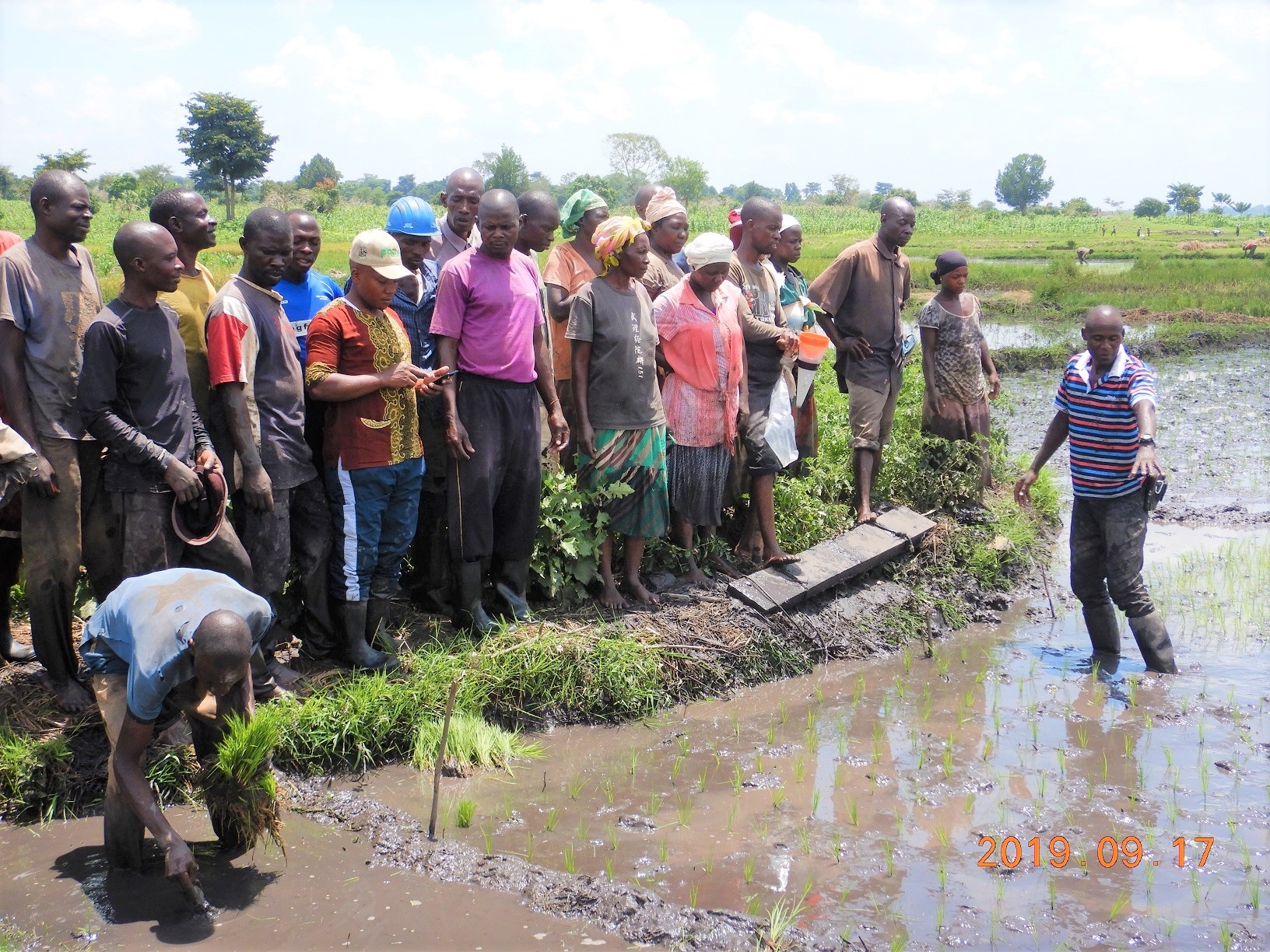
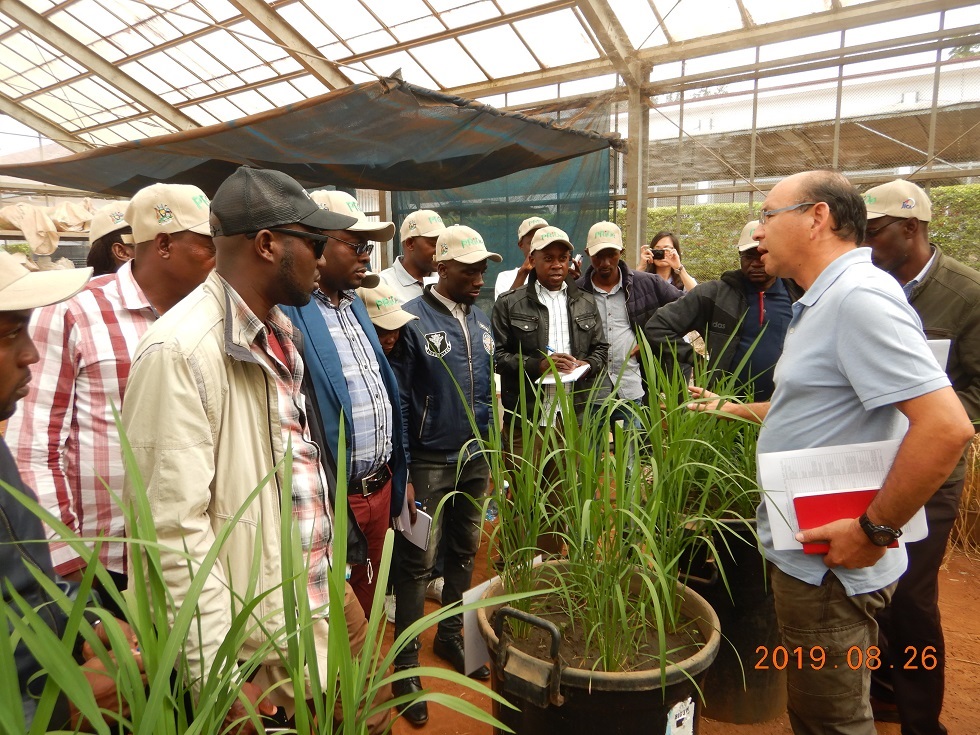
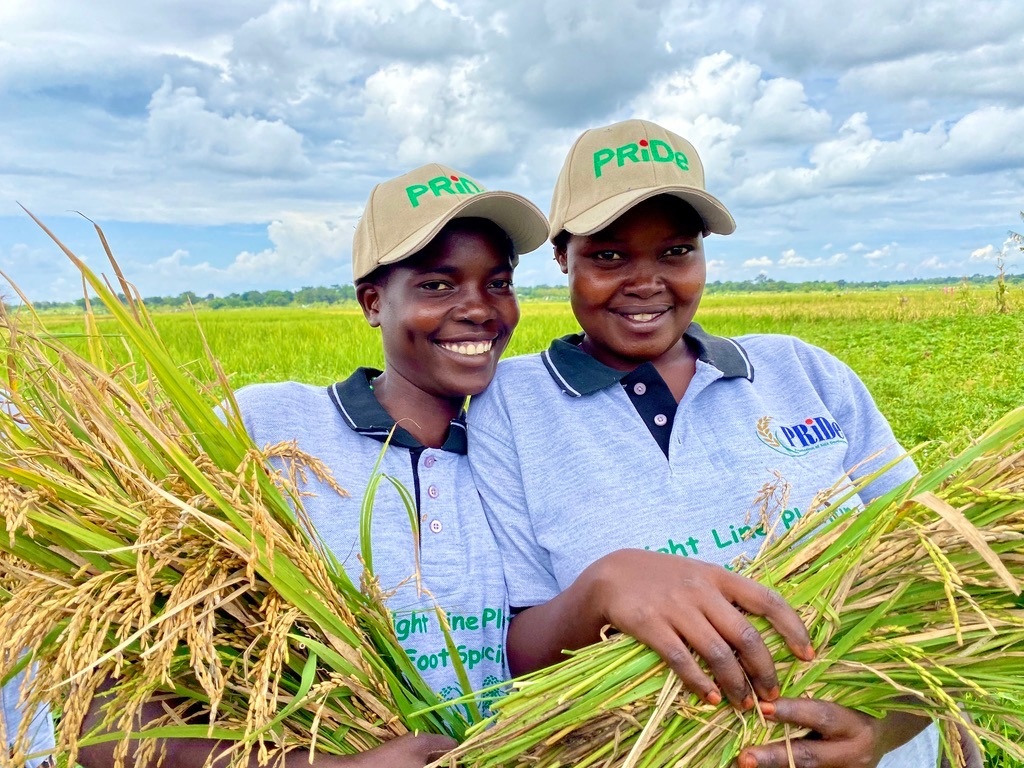
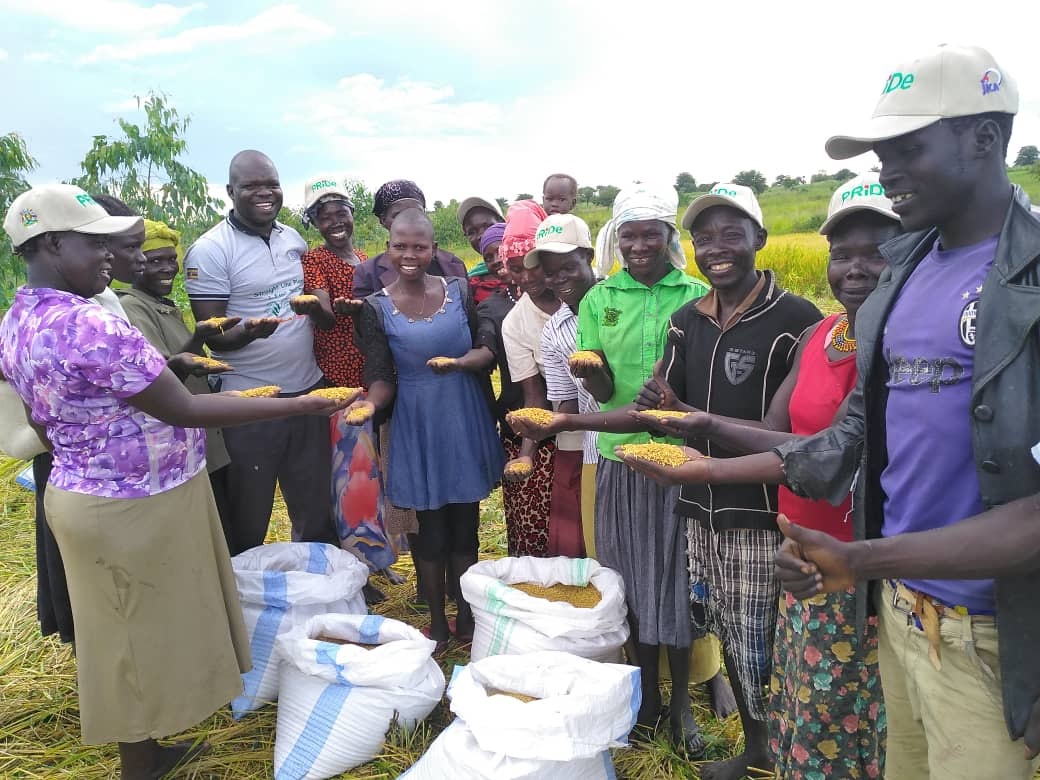
The project is expected to increase production and productivity, mainly of small holder rice farmers, by focusing on those factors that currently limit production which include;
In 2010, the ATAAS project was developed as an investment in maintaining and raising the level of farmer productivity and household income through the development and adoption of modern farming technologies, techniques and strengthening market linkages. The project had key activities along the research-extension-farmer-market value chain continuum under five components: (1) Developing Agricultural Technologies and Strengthening the National Agricultural Research System (NARS); (2) Enhancing Partnerships between Agricultural Research, Advisory Services and other Stakeholders; (3) Strengthening the National Agricultural Advisory Services (NAADS); (4) Supporting Agribusiness Services and Market Linkages; and (5) Program Management and Coordination.
The Ministry of Agriculture, Animal Industry, and Fisheries (MAAIF) and Japan International Cooperation Agency (JICA) agreed to execute a study for Irrigation Scheme Development referred to as The Project on Irrigation Scheme Development in Central and Eastern Uganda (PISD) through technical cooperation.
The focus was on establishment of medium and large scale irrigation scheme in Uganda targeting farmers cultivating mainly rice in lowland areas with season flooding and unreliable agricultural water source(s). The Study has was entrusted by JICA to the JICA Study Team consists of a consultant from Japan in collaboration with counterpart staffs from MAAIF and MWE. A total of 10 candidate sites districts were studied for irrigation development potential in the districts of Butambala, Buikwe, Kween, Sironko, Bukedea, Bulambuli, Mbale, Butaleja, Budaka and Soroti..
The Regional Pastoral Livelihoods Resilience Project (RPLRP) is a regional project financed by a USD 40 Million loan got by GOU from the World Bank and implemented by three IGAD member states: Uganda, Kenya and Ethiopia.
The RPLRP was prepared within the framework of the IGAD Drought Disaster Resilience and Sustainability Initiative (IDDRSI) and aligned with the Regional Programming Paper (RPP) and Country Programming Paper (CPPs).
Uganda Vision 20140 is a key strategy document for the government of Uganda (GOU) and aims to make Uganda a middle-income country by 2040. The National Development Plan II (NDP2) mentions the development of the livestock sector as one of these strategies, and in particular Uganda’s ability to produce some of the best beef in Africa.
Project Objectives
“To enhance the contribution of the goat industry to farmers’ income and welfare.”
Specific objectives
Avail improved indigenous and exotic (Savannah) goat germplasm to farmers in the project area which will serve as a springboard for establishing a pilot goat export zone in the country
To establish open nucleus breeding herds coupled with systematic cross breeding programme for generating meat goat types for fattening and
Improve the goat management systems and create sustainable supplies of quality goats for internal and export markets.